
Whoa! You ever open a transaction hash and feel like you landed inside a math textbook? Yeah, me too. My first impression was confusion—totally lost—then curiosity kicked in. Initially I thought the explorers all showed the same thing, but then I realized they index and surface different slices of the chain. Okay, so check this out—this piece walks through what matters when you inspect SOL transactions, how to use a top explorer like solscan, and practical tips to troubleshoot or verify activity without getting bogged down in noise.
Short version: transaction signatures are your receipts. Keep ’em. Seriously? Yes. A signature (sometimes called a txid) ties to a block, to a slot, to a set of instructions. When you paste that into an explorer, you’ll see who signed, which accounts changed, what programs ran, and whether the tx succeeded. But—there’s more nuance here than that first line suggests.
Solana is fast. Very fast. Blocks (slots) happen every 400ms-ish, though it bounces with network load. That speed gives great UX for everyday dapps, but it also means explorers and RPC nodes might disagree briefly about confirmation states. On one hand you get near-instant finality most of the time. On the other hand, explorers that cache data lag a touch, which can confuse users checking a freshly-broadcast tx.
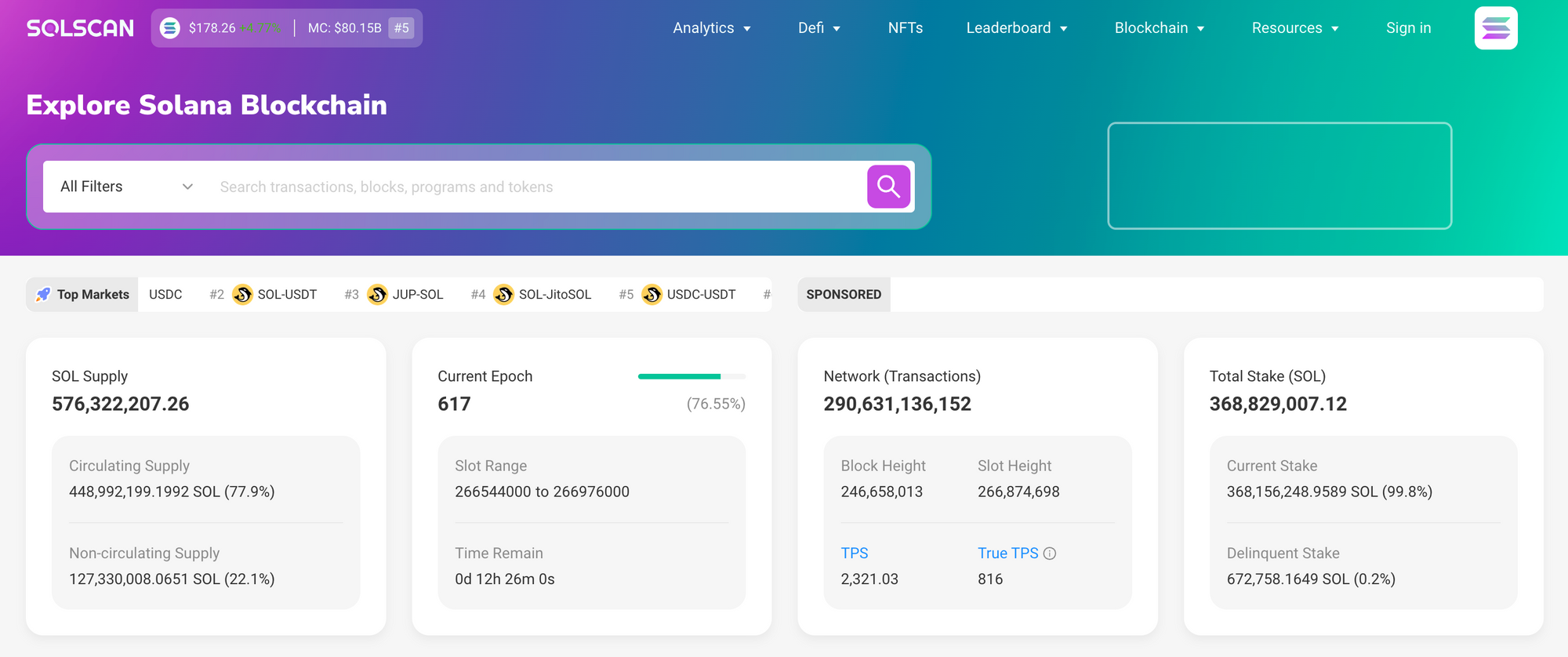
What to read on a transaction page
First, the header: signature, slot, block time, and status. Short and important. Then the accounts list. Medium detail there—who held lamports, who owns which token accounts, and what new accounts were created. Later, the instructions section shows the program calls: transfer SOL, mint token, swap on a DEX, etc. Finally, the logs show program-level output and error traces. Those logs are the place where you often find the real reason a tx failed.
Here’s the practical checklist I use when something looks off:
- Check status: success or failed. Short. That saves time.
- Look at the logs if failed; common reasons: out of compute, insufficient funds for rent, or instruction error.
- Confirm the slot and block time — maybe you’re seeing a stale cache.
- Inspect pre- and post-balances to see who paid what fee. Fees are lamports—convert to SOL if you need context.
- For token NFTs, inspect the token mint and associated metadata instructions to verify provenance.
My instinct said that every failed tx was the dapp’s fault. Actually, wait—let me rephrase that. Sometimes it’s the wallet, sometimes the node, sometimes the program. You can often tell by the error string in the logs. A runtime error from a smart contract looks different than a “blockhash not found” RPC-level error. The former is program logic, the latter is stale transaction context.
Solscan vs. the native Solana Explorer — why they differ
Solscan (that’s the one I reach for when I want more context fast) surfaces parsed instruction names, token metadata, and an intuitive UI for token transfers and NFT details. The native Solana Explorer is leaner and tends to be closer to raw RPC output. Both are useful. Solscan is friendly for digging into token mints and NFT metadata. The Solana Explorer is handy when you want something closer to the protocol view.
Heads-up: explorers index data on their own schedule. That means search, token metadata, and even some program-specific displays can be a bit delayed. If you just minted an NFT and it doesn’t show up immediately, don’t panic. Give it a minute and refresh. Also, cached data might hide recent account changes until the explorer re-indexes.
Tips for troubleshooting
Something failed? Start with the logs. Seriously. The logs usually show the exact instruction that errored and any error code or custom message. If logs are empty, check whether the tx never reached a validator (look for “blockhash not found” or “transaction expired”).
If a transaction is pending from your wallet, try resending with higher fee or different RPC. RPC nodes throttle and some wallets select a slow node. My go-to: try a public RPC from a reputable provider or bounce to another endpoint. Hmm… that said, don’t paste private keys into random nodes—obvious, but folks slip up.
Another common pain: token transfers to the wrong token account. Solana uses associated token accounts (ATAs). If you send an SPL token to a raw wallet address without the correct ATA, the funds might be lost or stuck until the recipient creates the ATA. So always check whether the destination has an ATA for that mint.
Reading logs like a pro
Logs contain events emitted by programs. A few patterns repeat: CPI (cross-program invocations), compute budgets used, and returned data. If you see “Program log: Instruction: Transfer” followed by “Program return: Error: Custom(0)”, you know the program author used a custom error enum. That requires mapping the numeric code back to source code or docs. Not fun, but possible.
Pro tip: when dealing with DEX trades, look at events for slippage and fees. You can often reconstruct the path the swap took and why the final amount was less than expected. That’s how I traced a friend’s inexplicable swap loss once—oh, and by the way, it was a price-impact issue combined with a weird route. Not the wallet.
Best practices for users
Save signature strings for important txs. Keep receipts for deposits and mints. Use explorers to verify token mints and creators before buying NFTs. Be cautious with unknown programs: if a transaction asks to “Approve” a program to spend tokens, that’s a permission grant. Revoke when you’re done.
For devs: emit human-friendly logs and stable error codes. Trust me, it makes your users’ lives easier and cuts support tickets. For power users: learn to read account diffs (pre/post state) to see exactly where lamports moved and which accounts changed ownership.
FAQ
Q: How do I find a transaction signature?
A: Your wallet shows it after you confirm a tx; you can also search by wallet address in an explorer and find recent signatures. Copy the signature string and paste it into the explorer search box.
Q: Why does a tx show “confirmed” in my wallet but “failed” in explorer?
A: Wallets sometimes show a local optimistic status. Check the explorer logs for definitive RPC-confirmed status and error messages. Also confirm the commitment level—processed vs confirmed vs finalized.
Q: Can I recover tokens sent to the wrong address?
A: Usually not, unless the recipient cooperates and has an associated token account or the program supports refunds. Prevention—double-check ATAs and mints—beats cure.